
In short: The Panama Canal, inaugurated in 1914, links the Atlantic and the Pacific over about 80 km. It's easy to visit from Panama City, at the Miraflores locks (visitor center open 8am-6pm, entrance ≈ US$17-22), where you watch giant ships rise before your eyes. Its 2016 expansion now welcomes “Neopanamax” container ships.
Some places tell the history of the world all by themselves. The Panama Canal is one of them. Watching a 300-meter container ship pass through the locks, hoisted meter by meter by the sheer force of water, leaves a lasting memory. Here's everything you need to know to understand and visit this masterpiece — one of the reasons I always advise starting a Panama trip with its capital.
A feat born in pain
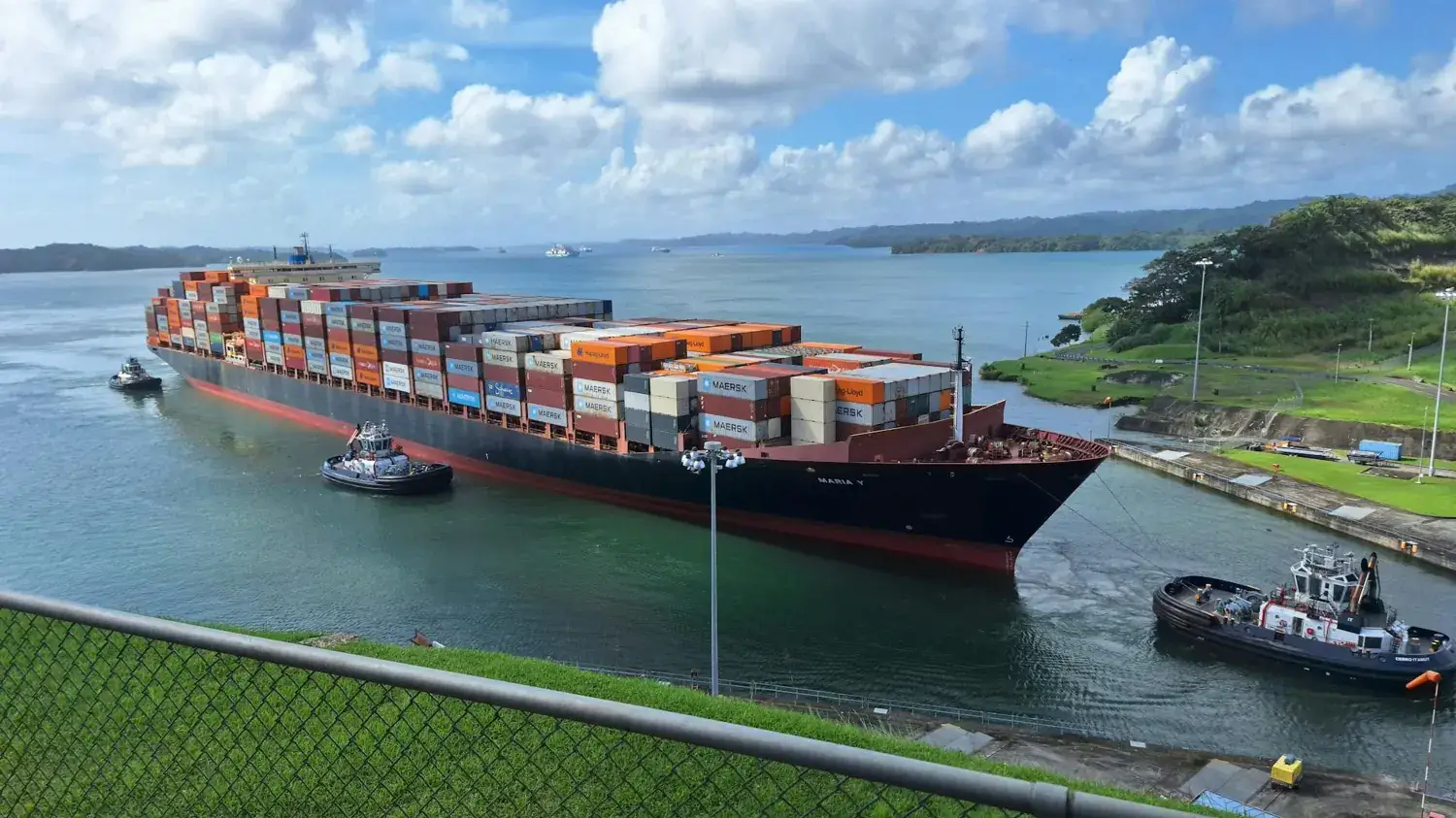
The Panama Canal was inaugurated on August 15, 1914, after ten years of titanic work taken over by the United States following the failure of the French project launched by Ferdinand de Lesseps. The human price was terrible: an estimated 25,000 deaths, mostly from tropical diseases (malaria, yellow fever). About 80 kilometerslong, the structure links the Atlantic Ocean to the Pacific and spares ships the trip around South America via Cape Horn.
How does it work?
The canal isn't dug at sea level: it works through a system oflocks that raise and then lower the ships. At the heart of the system, Lake Gatún, an immense artificial lake that was, at its creation, the largest in the world. A ship is raised on one side, crosses the lake, then is lowered on the other side toward the opposite ocean. The whole crossing takes 8 to 10 hours on average.
The 2016 expansion
To welcome ever-larger ships, Panama inaugurated on June 26, 2016 a third set of locks, after a project of more than 5 billion dollars: the locks of Coconut (Pacific side) andAgua Clara (Atlantic side). They allow the passage of “ Neopanamax ” container ships, up to 366 meters long. The canal remains one of the vital arteries of world trade today.
How to visit the canal?
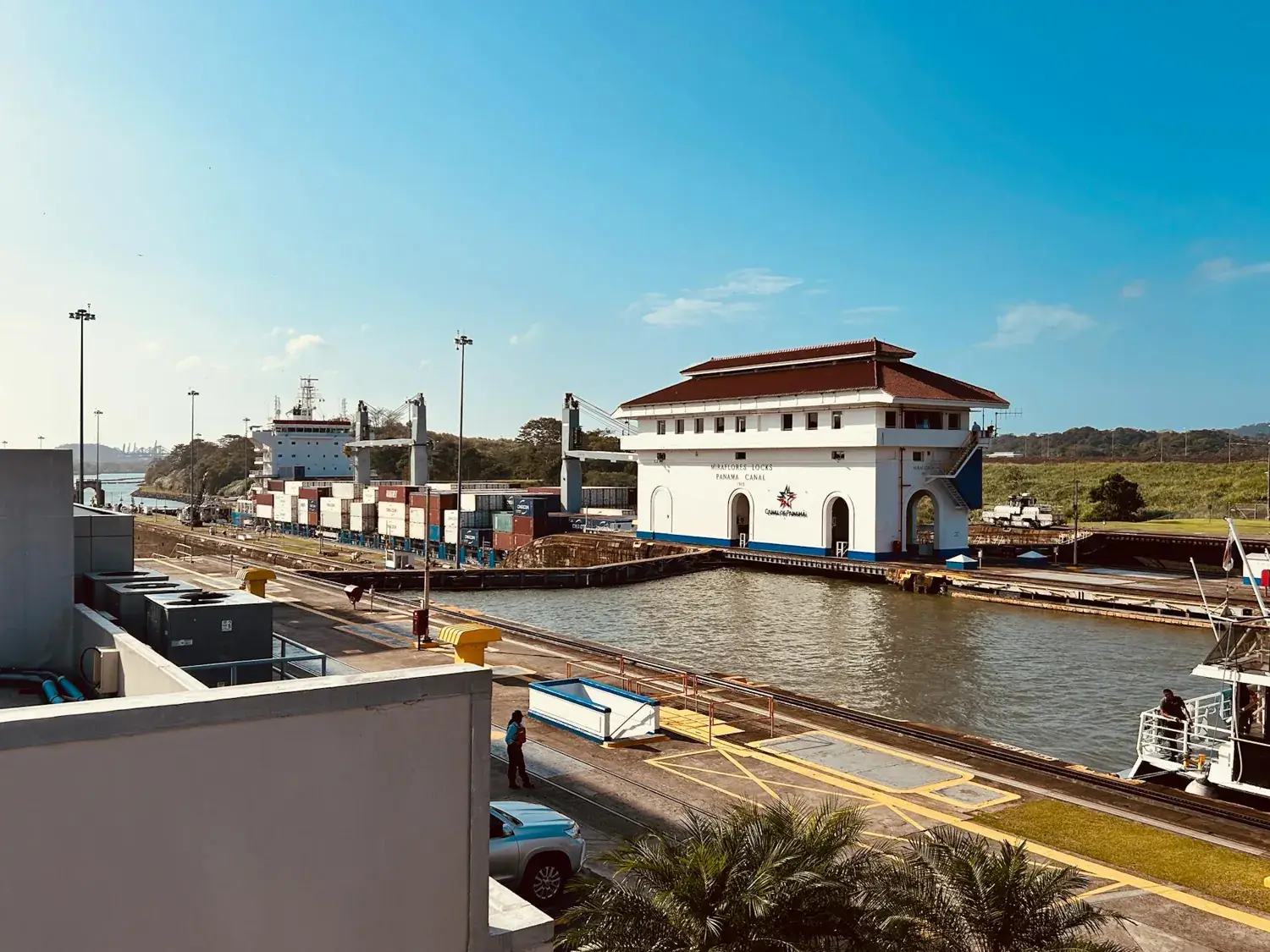
The simplest way is the Miraflores visitor center, some twenty minutes from central Panama City. There you'll find a four-level museum, a film, and above all observation terraces from which you watch ships pass through the locks live, with bilingual commentary. A few practical benchmarks:
| Practical information | Detail |
|---|---|
| Most visited site | Miraflores locks (Pacific side) |
| Opening hours | Open daily, approx. 8am-6pm |
| Entrance | ≈ US$17-22 per adult (2026 rate) |
| Tip | Come in the late morning or afternoon to see ships passing |
Another option on the Atlantic side: theAgua Claracenter, near Colón, offers an impressive view of the new locks and Lake Gatún. Enthusiasts can even board for a partial canal transit by boat, a memorable experience offered on certain days.
When to go?
The canal can be visited year-round, rain or shine. Like the rest of the region, the dry season (December-April) is the most comfortable, but a tropical shower won't stop you from admiring the ballet of ships from the covered terraces. To plan, see our guide when to visit Panama.
The canal in a few figures
- About 80 km long, between the Atlantic and the Pacific.
- More than 13,000 to 14,000 ships use it each year, carrying a major share of world maritime trade.
- 8 to 10 hours for a complete transit.
- Since 1999, the canal has been fully managed by Panama, after decades of American administration — a powerful national symbol.
- The toll for a large container ship can reach several hundred thousand dollars per transit.
A curious fact: because of the isthmus's “S” shape, at the canal the sun rises on the Pacific side and sets on the Atlantic side — the opposite of what you'd imagine.
Experiencing the canal differently
Beyond the observation terraces, there are several ways to experience the canal: a partial or full transit by boat (offered on certain days of the week), a nature outing in Soberanía National Park which runs along the waterway, or a trip on Lake Gatún, meeting the monkeys and birds on its islands. Enough to understand that the canal isn't just an industrial structure: it's also an extraordinary nature corridor.
Around the canal
The visit combines perfectly with the Biomuseo by Frank Gehry and the Calzada de Amador, both nearby, then with the Old Town at the end of the day. Nature lovers will push on to the national park of Soberanía and to Gamboa, deep in tropical forest along the canal, to watch birds and sloths. Find all these ideas in our article what to do in Panama and our 15-day Panama itinerary.
Frequently Asked Questions
In what year was the Panama Canal inaugurated?
On August 15, 1914, after ten years of work led by the United States, following the failure of the French project.
How long is the Panama Canal?
About 80 kilometers between the Atlantic and the Pacific, via the artificial Lake Gatún and a system of locks.
How much does visiting the Panama Canal cost?
Entrance to the Miraflores visitor center costs about US$17 to 22 per adult (2026 rate), museum and observation terraces included.
Can you watch ships pass through the canal?
Yes: from the terraces at Miraflores or Agua Clara, you watch live as ships pass through the locks. Come in the late morning or afternoon to maximize your chances.
Want to discover the canal and all of Panama?
At Toucan Discovery, an inbound agency specializing in Central America, we build the canal visit into a tailor-made trip, with the best addresses and guides. Request your quote: reply within 24 hours. Where build your trip directly on Toucan Dynamics, and Contact us.
Plan your trip to Central America.
A Toucan Discovery advisor helps you transform these ideas into a tailor-made itinerary — Costa Rica, Panama, Nicaragua. Real-time availability, instant quote.
Plan my trip French
 English
 Spanish
 Italian
 German
 Chinese