Colonial history
Colonial Zone, Catedral Primada 1540, Alcázar de Colón, Fort San Felipe Puerto Plata

From the Colonial Zone of Santo Domingo — the first European city of the New World, a UNESCO site — to Pico Duarte peaking at 3,098 m (the highest point in the Caribbean), from the humpback whales that return to Samaná every winter to the Larimar mines of Barahona, the Dominican Republic is far more than the all-inclusive capital of the Caribbean: it's the island shared with Haiti, theHispaniola of the Taíno.
The Dominican Republic is the cradle of the New World. It was on this island — which the Taíno called Quisqueya ('mother of all lands') and which Columbus renamed Hispaniola — that the Genoese navigator set foot on December 5, 1492, on his first voyage. Santo Domingo, founded in 1496, became the first European city of the New World : first cathedral (Catedral Primada de América, 1540), first university (Universidad Santo Tomás de Aquino, 1538), first hospital, first monastery, first paved street — everything here is a 'first'. The Colonial Zone has been UNESCO-listed since 1990: 16 hectares of golden stone where you still walk on flagstones trodden by Diego Colón, Hernán Cortés and Bartolomé de las Casas. Population: 11 million inhabitants — Afro-descendants (forced deportation 1502-1808), Hispanic-Taíno mestizos, descendants of Europeans, and a Haitian community. One island shared by two: the Dominican Republic covers the eastern two-thirds of Hispaniola, Haiti the west — the only Caribbean island with two sovereign states.
On the nature side, the country is a concentration of Caribbean superlatives. The Pico Duarte peaks at 3,098 meters in the Cordillera Central — it's the highest point in the entire Caribbean, higher than any summit in Cuba, Jamaica or Puerto Rico. In the southwest, Lake Enriquillois the largest lake in the Antilles and one of the world's rare saltwater lakes located below sea level (-40 m), home to American crocodiles American crocodile. À Samaná, every year mid-January to mid-March, 15,000 humpback whales (Humpback whale) come to breed and calve in the bay: one of the five largest whale gatherings in the world. The waterfall ofEl Limón drops 50 meters beneath the jungle; the 27 Charcos de Damajagua are a unique run of 27 chained waterfalls you descend by jumping and sliding down natural chutes. At Bahoruco in the southwest, Bahía de las Águilas is regularly ranked among the world's most beautiful beaches — 8 km of immaculate white sand without a single building, reachable only by boat from Pedernales.
And then there's Dominican culture, pulsing at full volume. Merengue and bachata — both born here, both listed as UNESCO intangible cultural heritage (merengue in 2016, bachata in 2019). People dance everywhere, all the time: in neighborhood colmados, on the beach in Las Terrenas, at Santo Domingo dance halls. And béisbol is the is the national religion: the Dominican Republic has sent more than 800 players to the American Major League, more than any other country outside the United States. San Pedro de Macorís is nicknamed the 'Cradle of shortstops' — Pedro Martínez, David Ortiz, Sammy Sosa, Robinson Canó, Albert Pujols — they all started here. On the plate: la bandera dominicana — white rice, red beans, stewed meat — the national lunch dish; mangú — green plantain mash at breakfast with fried eggs, salami and fried cheese; sancocho — a seven-meat stew for Sunday family meals; chivo guisado — stewed goat from the Northwest. All washed down with Brugal, Barceló or Bermúdez — three premium Dominican rum houses —, punctuated by Davidoff or Arturo Fuente cigars rolled in the Cibao valley, and accompanied by a morir soñando (milk + orange juice + ice, 'to die dreaming').
But above all, the country hides geological treasures unique in the world. Larimar — a turquoise semi-precious pectolite stone, endemic to a single mine in the world, at Los Chupaderos in Barahona province — exists nowhere else on the planet. Dominican amber — fossilized resin 25 to 40 million years old — is the only amber in the world where you frequently find perfectly preserved prehistoric insect inclusions : it's what inspired Jurassic Park (the fossil mosquito in amber). The country lives with several assumed paradoxes: all-inclusive capital of the Caribbean (Punta Cana and its 50,000 rooms) and a sharp ecotourism destination (Jarabacoa, Constanza, Barahona); a massive colonial heritage and a proud Afro-Caribbean identity; the land of salsa and bachata and the land of the pre-Lenten carnival — La Vega in February, horned Diablos Cojuelos masks, one of the most spectacular carnivals on the continent. Toucan Discovery serves the Dominican Republic beyond the beach clichés: we also show you the Dominicans' own country.
From the colonial Distrito Capital to the historic north coast, from the Samaná peninsula to the Cibao mountains, from all-inclusive Punta Cana to the desert southwest of Bahoruco — every region has its light, its rhythm, its history.
From the UNESCO Zona Colonial to the turquoise beaches of Bayahibe, from the mountains of Jarabacoa to the whales of Samaná, from the La Vega carnival to the larimar mines of Barahona — the Dominican Republic holds all of the Caribbean in one country.
Each destination is a journey in itself. Filter by desire to find those that speak to you.

First European city of the New World, Catedral Primada 1540, Alcázar de Diego Colón, Universidad 1538, 16 hectares of golden stone.

50 km of white-sand beaches, the Caribbean's all-inclusive capital, Hoyo Azul cenote, Cap Cana marina, boutique alternatives selected by Toucan.

Megaptera humpback whales mid-Jan to mid-March, El Limón 50 m waterfall, Las Galeras, Frenchified Las Terrenas, El Salto del Limón.

Isla Saona Cotubanamá National Park, legendary coconut-and-turquoise beaches, Bayahibe fishing village, Catalina Reserve diving.

Pico Duarte, summit of the Caribbean, rafting the Río Yaque del Norte, Salto Jimenoa, Valle Nuevo, strawberries and flowers of Constanza at 1,200 m.

Isabel de Torres cable car, Fort San Felipe 1577, amber museum, Cabarete world kitesurfing capital, Damajagua 27 waterfalls.
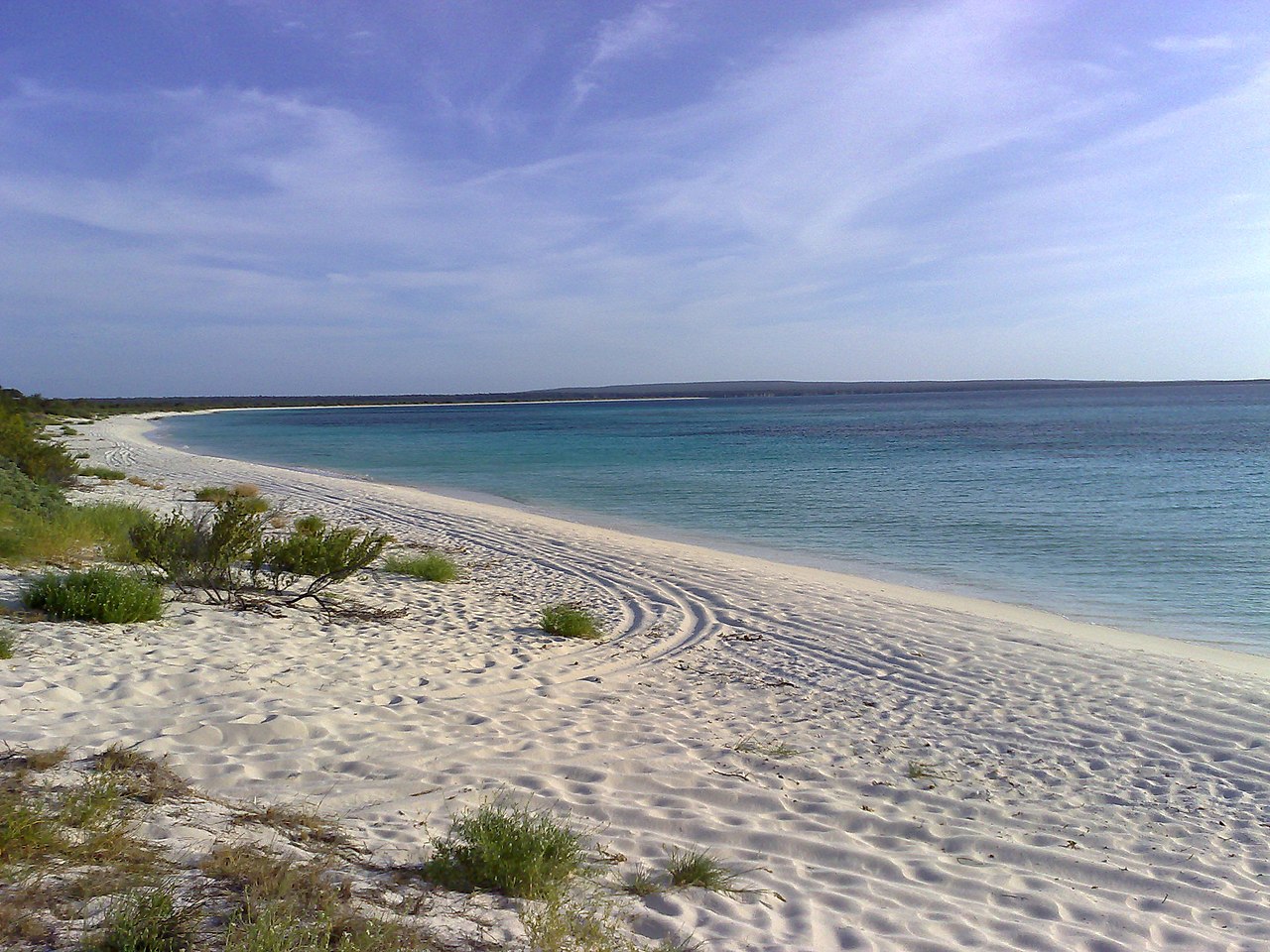
8 km of pristine unspoiled beach, larimar mines (a stone endemic worldwide), Lago Enriquillo crocodiles at -40 m, Jaragua Park.

Casa de Campo, Altos de Chavón — a replica 16th-century Tuscan villagee, a 5,000-seat amphitheater (Sinatra, Iglesias), Teeth of the Dog golf, world top 100.
Hispaniola has one of the highest endemism rates in the Caribbean: the prehistoric solenodon, the rhinoceros iguana, the Hispaniolan trogon — and the world's humpback whale rendezvous at Samaná.


.JPG/1280px-American_flamingo_(Phoenicopterus_ruber).JPG)
Build and book your trip in a few clicks: live hotel availability for Santo Domingo, Punta Cana, Samaná, Bayahibe and Puerto Plata via https://dynamics.toucandiscovery.com/, private transfers included, negotiated rates, secure payment. Toucan expertise, digital speed.
Spot destinations that fit your travel style at a glance.
Colonial Zone, Catedral Primada 1540, Alcázar de Colón, Fort San Felipe Puerto Plata
Samaná (15,000 individuals mid-Jan to mid-March), Silver Bank, Las Galeras
Saona Island, Bahía de las Águilas, Bávaro, Playa Rincón, Las Galeras
Pico Duarte (3,098 m), Jarabacoa, Constanza, Valle Nuevo, Salto Jimenoa
Santo Domingo (Zona Colonial colmados), Santiago, Las Terrenas, Cabarete
Cabarete (world kite capital), Las Terrenas, Bávaro Beach, Jarabacoa rafting
Lake Enriquillo, Bahoruco, Jaragua Park, Isla Cabritos, Damajagua
La Vega Carnival (February, Diablos Cojuelos), Santiago Lechones, Bonao
Choose the one that speaks to you. Request a tailor-made quote or book directly on Toucan Dynamics.
8 nightsSDQ → Santo Domingo (3n boutique hotel Zona Colonial, Catedral Primada 1540, Alcázar de Colón, Fortaleza Ozama, Mercado Modelo market, hand-rolled cigar workshop, mofongo dinner at Pat'e Palo) → transfer to Bávaro (5n, Bávaro beach, Isla Saona day trip, Hoyo Azul cenote, bachata evening on the beach). The essential combo: two Dominican Republics in one trip.
9 nightsPOP → Puerto Plata (2n, Isabel de Torres cable car, Fort San Felipe, amber museum, Damajagua 27 waterfalls day trip) → Cabarete (2n optional kite/surf) → Las Terrenas (3n Frenchified village, El Limón 50 m waterfall on horseback, Playa Rincón) → Samaná (2n, Megaptera humpback whales mid-Jan to mid-March, Cayo Levantado 'Bacardi Island'). The Toucan winter program — also composable on Dynamics.
10 nightsSDQ → Santo Domingo (2n Zona Colonial) → Jarabacoa (3n mountain ecolodge, Yaque del Norte rafting, Salto Jimenoa, optional 2-3 day Pico Duarte ascent) → Constanza (1n, strawberries & flowers at 1,200 m, Valle Nuevo) → Barahona (3n wild coast, Los Chupaderos larimar mine, Bahía de las Águilas, Lago Enriquillo crocodiles, rhinoceros iguanas) → SDQ (1n). Zero all-inclusive, 100% on the ground — for curious travelers.
8 nightsSDQ → Santo Domingo (2n Zona Colonial, Catedral Primada, Alcázar, cigars, mofongo workshop) → La Romana / Casa de Campo (1n, Altos de Chavón Tuscan village, 5,000-seat amphitheater, optional Teeth of the Dog golf) → Bayahibe (5n fishing village, Isla Saona Cotubanamá Park, Isla Catalina diving, Cueva de las Maravillas Taíno petroglyphs). History + legendary beaches.
14 nightsSDQ → Santo Domingo (2n Zona Colonial) → Bayahibe + Saona (2n) → Punta Cana (2n 5★ boutique hotel) → Samaná & Las Terrenas (3n, whales in winter, El Limón) → Puerto Plata + Cabarete (2n, amber, Damajagua) → Jarabacoa (1n, Yaque rafting) → Barahona (2n, larimar, Bahía de las Águilas, Lago Enriquillo). The country in all its diversity, from colonial heritage to the wild southwest coast.
Tropical Caribbean climate. The country is located in the Antilles hurricane corridor from June to November — we say this honestly, and we know how to work around it.
Good to know: The best windows are December to April, and particularly mid-January to mid-March (oily-calm sea, excellent diving visibility, and of course the whales at Samaná). November - early December is also a prime window: prices still low, vegetation at its peak. In case of weather events, our local agency on site monitors the situation continuously and adapt the route in real time if necessary to preserve the experience.
The essentials in 8 cards. We'll take care of the rest.
Three main international airports: Punta Cana (PUJ) — the best served from Europe (direct flights Air France, Air Caraïbes, ASL Airlines, XL Airways from Paris) — Las Américas Santo Domingo (SDQ) — the capital — and Puerto Plata (POP) — the north coast. Direct Paris-Punta Cana flight: 9-10h. Limited domestic flights: fast land routes (modern Coral and Las Américas highways). Local agency private transfers recommended.
No visa for French, Belgian, Swiss and Canadian nationals (stays ≤ 30 days). Passport valid 6 months beyond your exit date. Tourist card 10 USD, now included in the airfare since 2018. Electronic entry and exit form e-Ticket mandatory (free, to be filled in 72h before departure at eticket.migracion.gob.do).
No mandatory vaccines for France (except yellow fever if arriving from an endemic zone in Amazonia / Africa). Recommended: hepatitis A & B, typhoid, DTP. Seasonal dengue (mainly July-November): DEET mosquito repellent essential. Non-potable tap water anywhere — bottled water only; serious lodges have filters. Well-stocked pharmacies in the cities.
Dominican peso (DOP), rate ~60 DOP = 1 USD (May 2026). The USD is widely accepted in tourist areas (Punta Cana, Bávaro, Bayahibe, Las Terrenas) — the Euro too, though less systematically. Visa/MasterCard accepted in tourist hotels and restaurants. ATMs everywhere. Cash recommended for markets, colmados and taxis outside tourist zones. 10% tip customary, often included in the bill (propina legal).
Spanish the official language — the Dominican accent is fast and sing-song, '¿qué lo qué?' replaces '¿qué tal?', and end-of-syllable S's disappear. English is very widespread in tourist areas (Punta Cana, Bávaro, Bayahibe, Las Terrenas, Cabarete) — hotel staff are trained. French in Las Terrenas (a French community settled since the 1980s), Italian in Las Galeras and Las Terrenas. Haitian Creole along the western border. A few Taíno words survive in the language: huracán, hamaca, canoa, tabaco, batata, sabana — passed into Spanish and then to the whole world.
Good in tourist areas — Punta Cana, Bávaro, Bayahibe, Las Terrenas, Samaná, Cabarete and Jarabacoa are safe and well managed. Santo Domingo calls for big-city caution: avoid certain neighborhoods at night, official taxis, no conspicuous displays of wealth. The Haitian border should be avoided without supervision. Local agency support = private transfers, no unidentified taxis, known drivers. Toucan itineraries systematically avoid risk areas.
110V / 60 Hz — as in the United States. Outlets Type A & B (flat prongs). A simple adapter for French equipment (no transformer needed if your devices are dual-voltage — which is the case for most phone, laptop and camera chargers). Occasional outages (apagones) — most hotels have generators. Decent wifi in hotels, sporadic in the mountains (Jarabacoa, Bahoruco).
La bandera dominicana (the lunch dish: white rice + red beans + stewed meat + salad), Mangú (green plantain mash with eggs, salami, fried cheese — los tres golpes), Sancocho (a 7-meat stew), Pescado con coco in Samaná. To drink: Brugal, Barceló, Bermudezrums, Presidentebeer, and the famous Morir Soñando (milk + orange juice + ice).
"We'd timed the trip for mid-February for the whales. The boat leaves Samaná at 9 am; 30 minutes later the sea opens up: a mother and her calf, 50 meters away. Then a male breaching, twice — fifteen tons, completely out of the water. All three of us cried. Toucan had chosen a CITES-certified operator with a hydrophone — we heard the songs live. And that evening, a pescado con coco dinner facing the bay, with the whales still just visible offshore."
"We'd asked Toucan to get us out of the all-inclusive. A three-day ascent of Pico Duarte with a local guide and mules for the bags. The first night at La Compartición at 2,500 m, we were COLD — in the Dominican Republic! Up at 4 am, the summit at dawn, and the whole archipelago opens up: Cuba in the distance, all of Hispaniola, the Caribbean Sea. Nobody believes us when we say we went mountaineering in the DR. Yet it's the roof of the Caribbean."
"We'd underestimated Santo Domingo. Three nights, we'd said. We added two more. The Catedral Primada at 8 am with nobody around, coffee at the Hostal Nicolás de Ovando, the pedestrian calle El Conde where strangers taught us a few bachata steps on a Tuesday night, expecting nothing in return. A city you live, not a museum. Our Toucan advisor had insisted we start there before the beach. She was right."
Choose the path that fits your project. Both lead to the same Quisqueya.
Whether you prefer the guided path of an expert or the fluidity of our platform Toucan Dynamics — your trip starts here. The cradle of the New World is waiting for you. Bienvenidos a Quisqueya.
Response within 48 hours. A custom 100% trip designed by our French-speaking experts based on-site.
 French French
 English
 Spanish
 Italian
 German
 Chinese