
In short
- Panama is one of the rare countries where humpback whales from both hemispheres.
- Main season: July to October (peak in August-September-October); a second window from December to April.
- Best spots: the Las Perlas archipelago, Isla Taboga, the Azuero peninsula (Pedasí), Coiba.
- Observation regulated by the ARAP: 250 m distance, 30 min max, certified operator.
Every year, hundreds of humpback whales travel up the warm waters of the Panamanian Pacific to mate, give birth, and raise their young. A giant ballet, surprisingly close to the coast — and accessible to every traveler. Nicknamed ballenas jorobadas, these giants can reach 16 meters and weigh up to 40 tonnes. Here's everything you need to know to live this moment.
A phenomenon unique in the world
Panama occupies a rare position on the planet: its Pacific waters host both the whales from the South hemisphere (from Antarctica and Chile) and those from the Northernhemisphere. Two populations, two seasons, the same ocean.
- 2 000+ marine mammals frequent the Pacific coast each season.
- ~30 species of cetaceans, including spotted dolphins, bottlenose dolphins, and orcas.
- Up to 16 m long for an adult humpback whale.
- 2 hemispheres crossing paths in the same Panamanian waters.
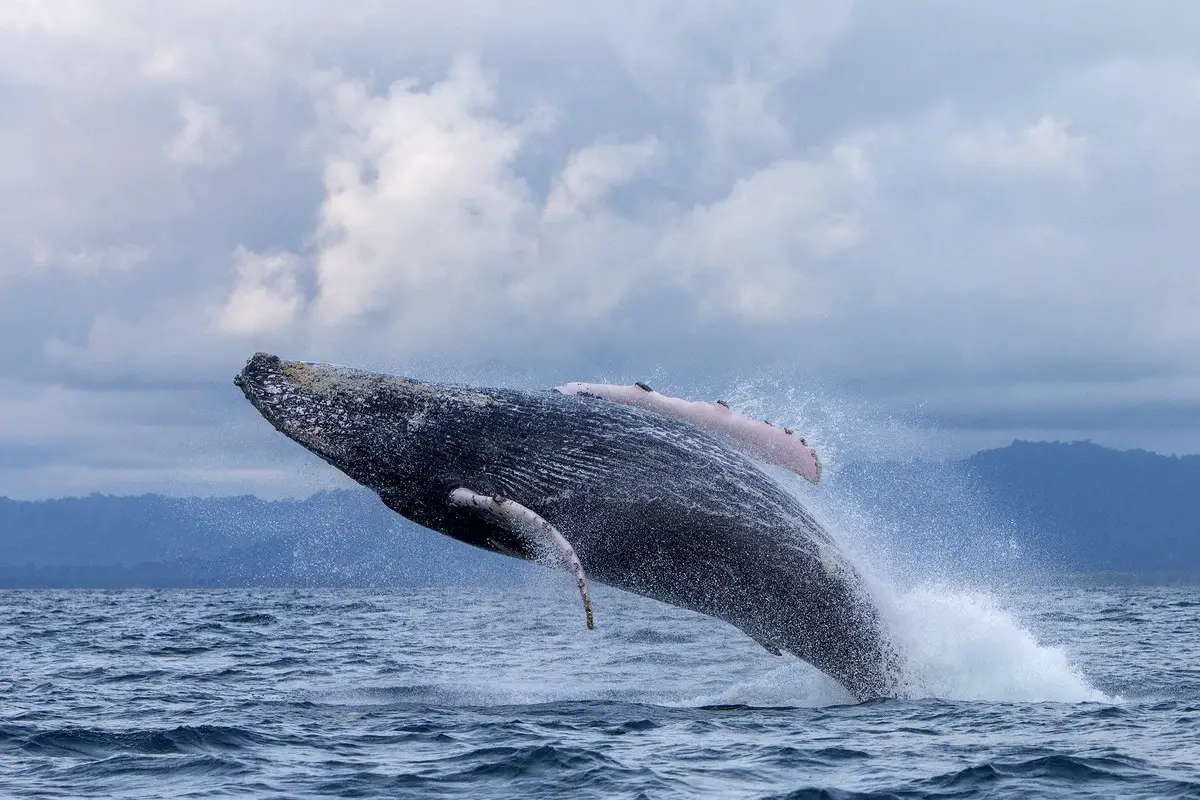
When to go whale watching in Panama?
The main season corresponds to the arrival of the Southern Hemisphere whales, from July to October, peaking in August, September, and October : mothers and their calves linger near the coast, turning the Pacific into a true open-air nursery. A second, more discreet window welcomes the Northern Hemisphere whales from December to April.
| Period | What you see |
|---|---|
| July – October | Main season (Southern Hemisphere), peak Aug-Sept-Oct, mothers and calves near the coast. |
| December – April | Second window (Northern Hemisphere), more discreet. |
Good news: July–October coincides with the green season, less crowded — you enjoy the show far from the crowds, and the tropical showers last only a few hours.
Where to watch whales in Panama?
The whole Pacific coast works. Here are the most accessible departure points:
1. Las Perlas Archipelago
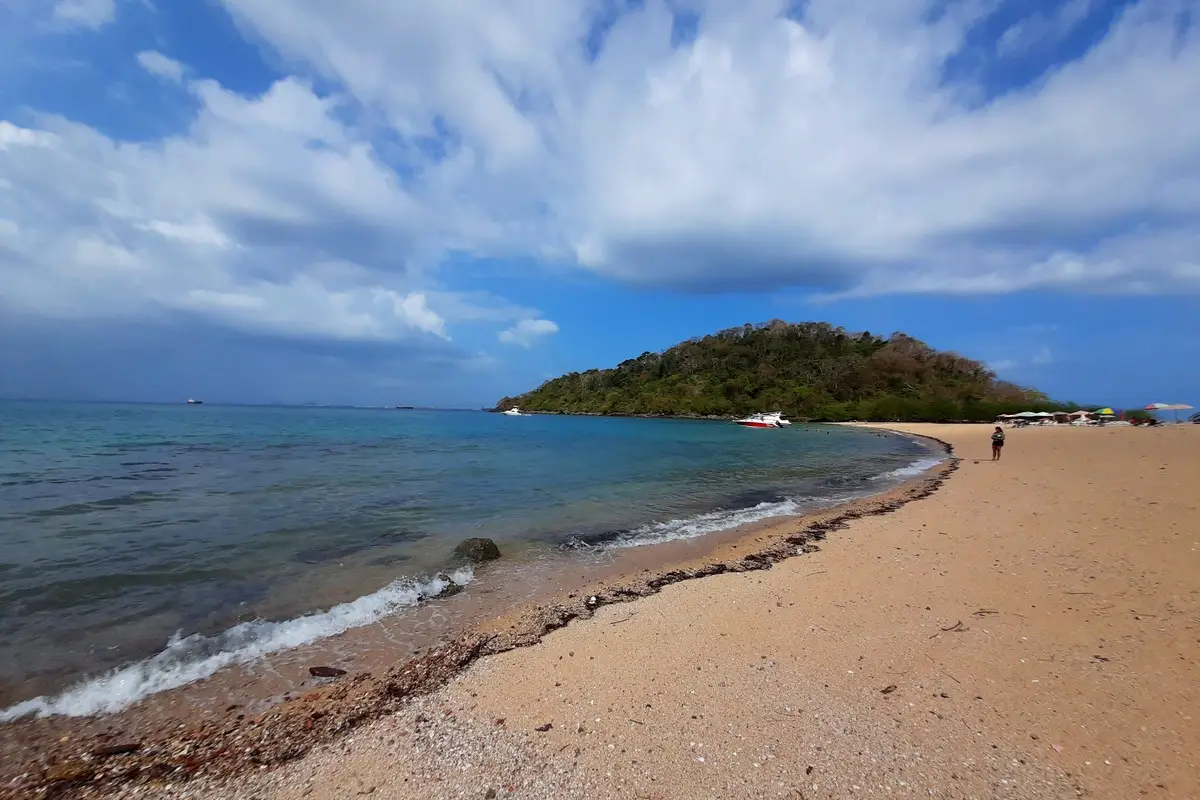
An hour by boat from Panama City. The easiest to organize as a day trip, often in a small group.
2. Isla Taboga
20 km south of the capital, the “island of flowers” combines a dream beach with observation outings.
3. Azuero Peninsula — Pedasí & Isla Iguana
In the south, near Pedasí and Venao: rich waters, whales close by, and the chance to watch turtles nesting on Isla Cañas.
4. Veraguas & Coiba National Park
An exceptional marine sanctuary where you encounter whales on snorkeling and diving outings.
Watching responsibly
The whales come here at a vital moment: to breed and raise their young. A few rules, enforced by Panama's Aquatic Resources Authority (ARAP), protect both the wildlife and the travelers.
- 250 meters minimum between the boat and the whales (100 m for dolphins).
- 30 minutes maximum of observation per group of whales.
- 4 knots (≈ 7 km/h) maximum on approach: no sudden changes of speed or course.
- Never cut across a whale's path or approach a lone calf. Choose a certified operator that respects these rules.
Preparing your outing well: the checklist
- Sunscreen & hat
- A light windbreaker and clothes that don't mind water
- A waterproof cover for the camera
- Water, snacks, and seasickness medicine if needed
- Binoculars (optional) and a bit of patience… it's worth the wait
Organizing your trip to Panama
Whale watching combines perfectly with the country's other treasures. To go further, see our practical guide to preparing your trip to Panama, and if you're torn between two destinations, our comparison Costa Rica or Panama.
At Toucan Discovery, we design your Panama trip tailor-made — whale watching, islands, beaches, and much more — supported by a French-speaking field expert. Want to move faster? Build and book your trip online on our platform Toucan Dynamics, or Contact us directly.
Take the guide everywhere with you
Download our illustrated guide “Whale watching in Panama” in PDF format.
Frequently Asked Questions
What is the best time to see whales in Panama?
From July to October, with a peak in August, September, and October. A second window exists from December to April.
Where to see whales in Panama?
Mainly on the Pacific coast: the Las Perlas archipelago, Isla Taboga, the Azuero peninsula (Pedasí), and Coiba National Park.
Can you watch whales near Panama City?
Yes. Las Perlas and Isla Taboga are reachable on a day trip from the capital.
Is whale watching regulated?
Yes, the ARAP requires a minimum distance of 250 m, 30 minutes of observation maximum, and reduced speed. Choose a certified operator.
Plan your trip to Central America.
A Toucan Discovery advisor helps you transform these ideas into a tailor-made itinerary — Costa Rica, Panama, Nicaragua. Real-time availability, instant quote.
Plan my trip French
 English
 Spanish
 Italian
 German
 Chinese