
In short: Yes, Costa Rica travels very well with a baby. The country is safe, nature accessible, care good quality, and the health risk low. Favor the dry season (December to April), few stops, and gentle regions like Sámara, Manuel Antonio, or La Fortuna, and rent a car with a car seat to move at your own pace.
Traveling to Costa Rica with a baby often makes young parents hesitate: a long flight, the jungle, mosquitoes, sometimes battered roads… Yet it's one of the tropical destinations I most gladly recommend to families with a little one. In fifteen years organizing stays here, I've seen dozens of couples come through with an infant of a few months: nearly all leave won over. The secret isn't giving up, it's adapting the pace. Here is, with no sugarcoating, what I really tell my clients.
Is Costa Rica a good destination with a baby?
Frankly, yes. Costa Rica ticks the right boxes for a first big family trip: it's a politically stable country, without an army since 1948, where children are warmly welcomed — Ticos adore babies and show it. The public health system (the famous CCSS) is considered one of the best in Latin America, and San José has several good private hospitals and clinics.
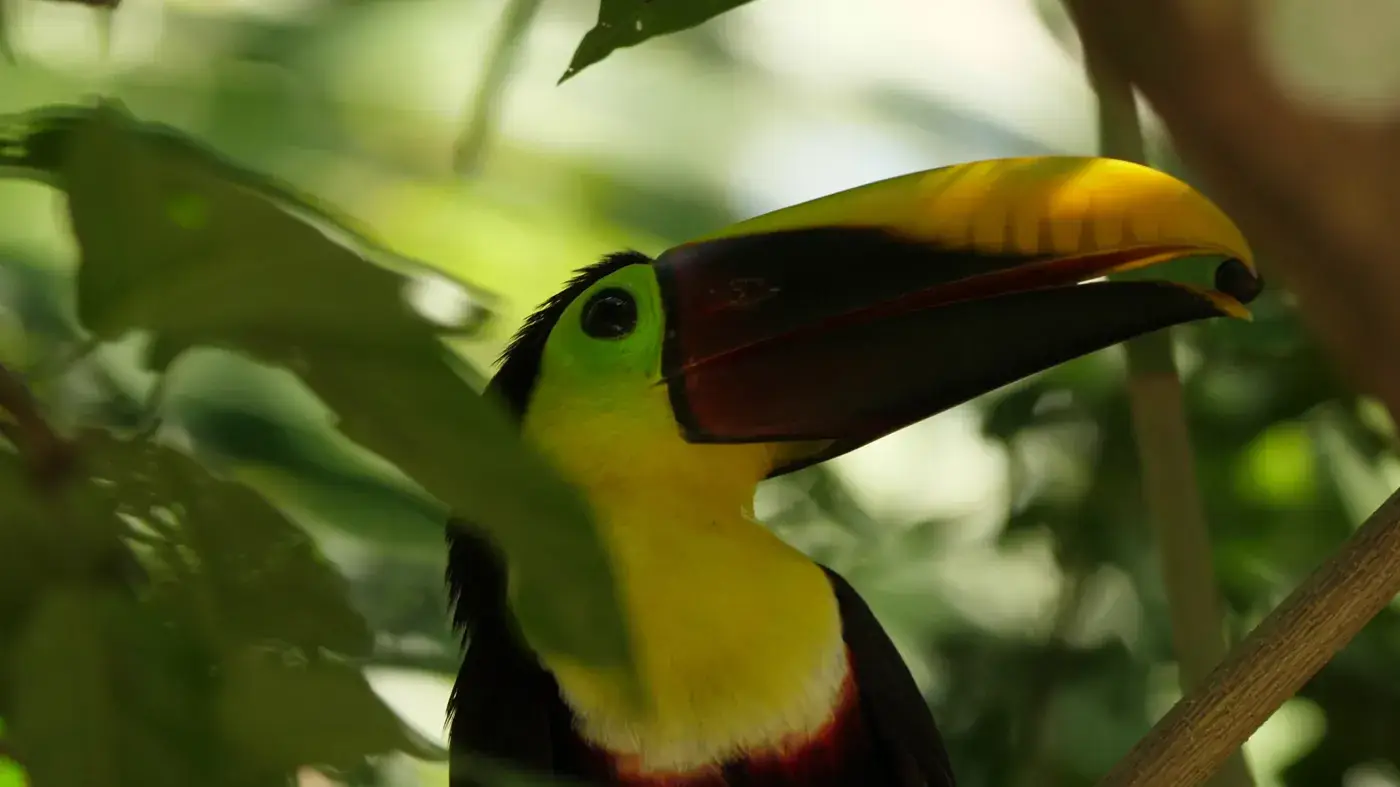
The health risk remains low: no vaccine is mandatory for a traveler coming from Europe, malaria is on its way to eradication, and the water is generally drinkable in tourist areas. Nature, meanwhile, is within arm's reach: no need for long hikes to see monkeys, sloths, or toucans. That's precisely what makes the destination so comfortable with a little one.
Not to be confused with our broader guide to traveling to Costa Rica with children : here, we focus on the specifics of babies and toddlers (0–3 years), where the logistics demand a bit more attention.
At what age can you take a baby to Costa Rica?
There's no “forbidden” age, but a few common-sense markers. Many pediatricians advise waiting until the baby has had their first vaccines (often around 2 to 3 months) before a long-haul flight. Between 3 and 9 months, the trip is actually quite simple: the baby sleeps a lot, isn't walking yet, and nurses or takes a bottle anywhere.
Once they're walking (around 12–18 months), you need to watch more closely (sand, pools, lodge stairs), but the wonder is tremendous. One regulatory point to know: the yellow fever is only required when arriving from an at-risk country, and children under 9 months are exempt in any case. For a departure from France or Belgium, no certificate is requested. In all cases, get the advice of your pediatrician or an international vaccination center before leaving.
When to go to Costa Rica with a toddler?
For a first trip with a baby, I recommend without hesitation the dry season, from December to April : clear skies, easier roads, fewer mosquitoes, and predictable days — real comfort when you're scheduling naps. The green season (May to November) has its charm and gentler rates, but the late-afternoon showers and increased mosquitoes require a bit more organization with an infant.
The time difference works in your favor: it's 7 to 8 hours behind France, which “shifts” the baby's rhythm earlier — many adapt in two or three days. For the month-by-month detail, see our pillar When to go to Costa Rica.
Health: what you really need to know
It's parents' big question, so let's be precise and honest.
Vaccines and diseases
No mandatory vaccine when departing from Europe. Simply make sure the baby's vaccination schedule is up to date (diphtheria, tetanus, polio, whooping cough, measles depending on age). Malaria is residual and doesn't justify preventive treatment for a standard tourist stay. Dengue, on the other hand, is endemic and rises during the rainy season on the coasts (Guanacaste, Puntarenas, Limón): the real protection is mosquito repellent.
Mosquitoes, water, and sun
Protect the baby at sensitive hours (sunrise and sunset) with light covering clothes, a mosquito net over the stroller or bed, and an age-appropriate repellent — ask your pharmacist before leaving. Water-wise, tap water is drinkable in tourist areas, but for an infant I recommend bottled water, especially for preparing bottles and in remote corners. Finally, the tropical sun is powerful: hat, shade, and high-protection sunscreen are essential.
If something goes wrong
Pharmacies are numerous and well stocked, and doctors often speak English. Take out travel insurance covering medical costs and repatriation for the whole family: it's the one item I never compromise on.
Where to go with a baby: the gentlest regions
The golden rule with a toddler: few stops, short drives. Two or three comfortable bases beat a tour that strings roads together. Here are the regions I recommend most often.
| Region | Why with a baby | Best for |
|---|---|---|
| Sámara (Nicoya) | Sheltered bay, calm sea, quiet human-scale village | A gentle first beach stop |
| La Fortuna / Arenal | Easy wildlife, hot springs, short flat walks | Nature accessible without effort |
| Manuel Antonio | Monkeys and sloths steps away, sheltered beaches, services on site | Combining jungle and swimming |
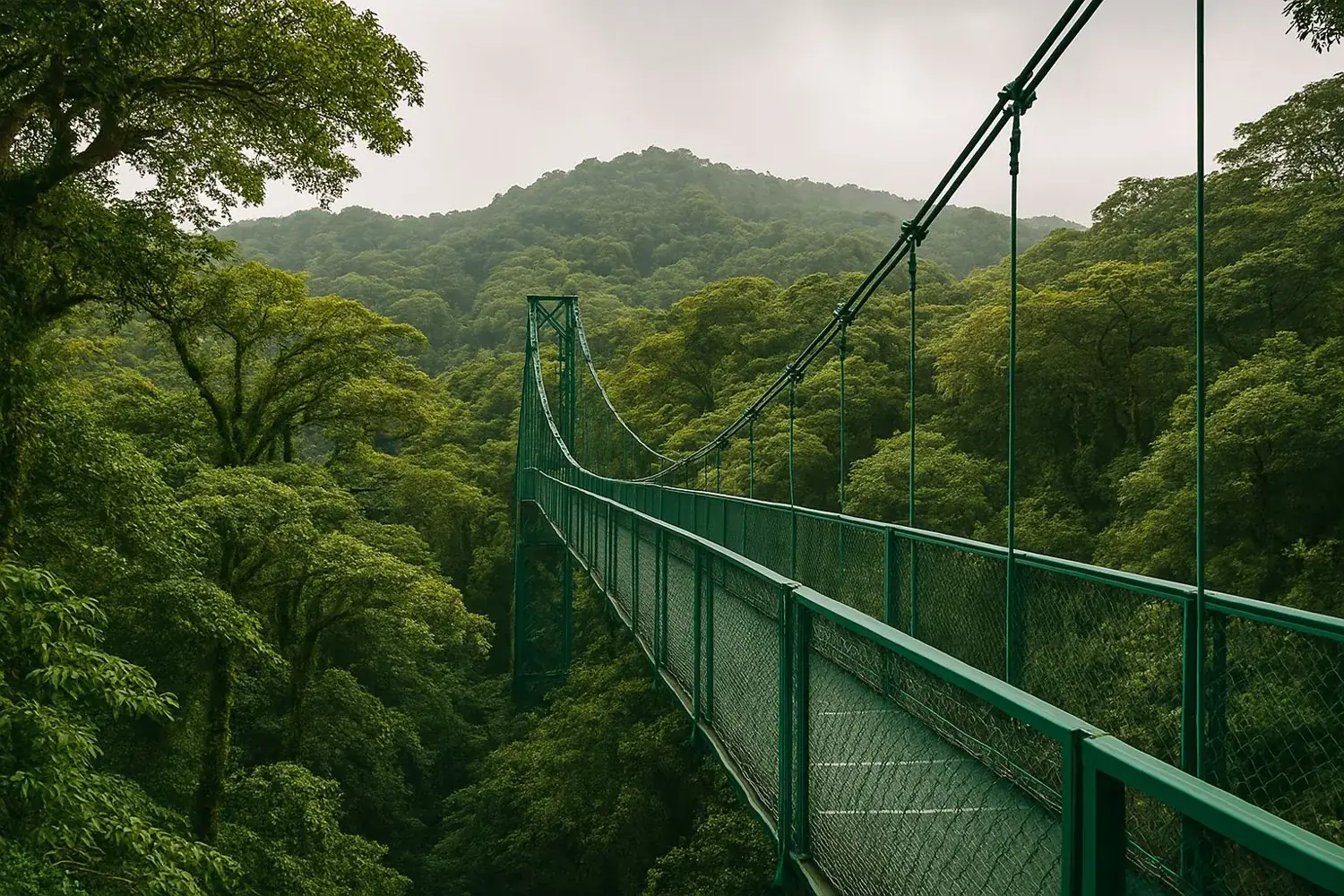
| Monteverde | Cool climate (good for sleeping), wide hanging bridges doable with a carrier | Cloud forest break |
| Puerto Viejo / Cahuita | Laid-back Caribbean vibe, calm lagoons | Travelers with no time pressure |
You'll find the details of each destination in our Manuel Antonio guide and our Arenal guide. For a stay entirely designed around rest and gentle nature, take a look at our Serenity collection.
Getting around: car, car seat, and logistics
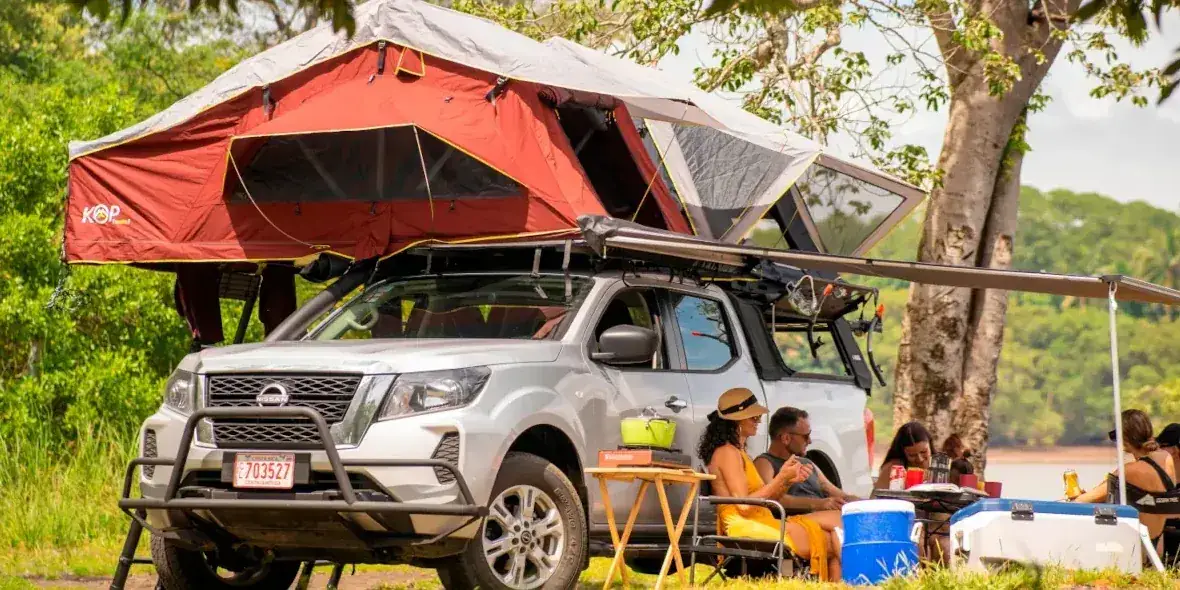
A rental car remains, by far, the most practical way with a baby: you stop when you want, schedule the naps, and keep your things at hand. Allow about €70 per day, basic insurance included, for a comfortable vehicle. The car seat is mandatory in Costa Rica for children under 12 (and under 1.45 m): the law is strict and the fines steep. All agencies offer baby seats as an option — book ahead and check its condition at pickup, or bring your own.
For getting around on site, forget the stroller outside the towns: between sand, dirt paths, and roots, the baby carrier is far more practical. All the details (insurance, deposit, driving) are in our dedicated guide to car rental in Costa Rica.
What to pack in the baby's suitcase?
A field tip: baby products are found mostly in San José (supermarkets, pharmacies). In the rest of the country, the supply is more limited. I therefore encourage parents to bring a comfortable stock of the essentials:
- Plenty of diapers (available locally, but not always the right size or brand);
- Powdered infant formula if you use it, and sterilizing supplies;
- An ergonomic baby carrier (more useful than the stroller);
- A portable mosquito net, suitable repellent, high-protection sunscreen, and a hat;
- A basic first-aid kit (children's paracetamol, disinfectant, thermometer);
- Light covering clothes for evenings and the higher areas (Monteverde, San Gerardo de Dota, cooler).
For the formalities (the baby's passport, possible authorization), everything is detailed in our article on formalities and the visa for Costa Rica.
What itinerary and budget to plan?
With a baby, I recommend at least two weeks to enjoy it without rushing, and ideally three if your leave allows. A simple, proven pattern: a few days around Arenal for easy nature, then a quiet beach region like Sámara or Manuel Antonio, limiting each drive to two or three hours. Our 15-day itinerary can serve as a base, to be “slowed down” for a little one.
Budget-wise, expect roughly the same order of magnitude as an adult trip — the baby often flies free or at a reduced fare and doesn't pay park entrance. Our benchmark figures are in the guide budget for a Costa Rica trip. And if you'd rather build and fine-tune your stay yourself, stage by stage, you can put it together directly on Toucan Dynamics.
Frequently Asked Questions
Is it dangerous to go to Costa Rica with a baby?
No, it's one of the safest tropical destinations for families. The health risk is low, care is good quality, and nature is accessible. Just adapt the pace, protect well against mosquitoes and sun, and take out health insurance.
What is the best time to travel with an infant?
The dry season, December to April: less rain, fewer mosquitoes, and easier roads. The 7-8 hour time difference “shifts” the baby's rhythm earlier and is absorbed within a few days.
Is a car seat mandatory?
Yes. The law requires a suitable device for any child under 12 and under 1.45 m. Rental companies offer baby seats as an option: book ahead or bring your own.
Does the baby need any special vaccines?
No vaccine is mandatory when departing from Europe. Simply make sure the vaccination schedule is up to date and ask your pediatrician. Yellow fever is only required when arriving from an at-risk country, and babies under 9 months are exempt.
Prepare your family trip
A trip with a baby needs careful preparation — and that's precisely our job as a local agency. Tell us your child's age and your wishes: we reply within 24 hours with a tailor-made project, at the right pace. Request your personalized quote, or build and fine-tune your itinerary directly on Toucan Dynamics. Pura vida — we take care of the rest.
Also read: what to pack for Costa Rica.
Plan your trip to Central America.
A Toucan Discovery advisor helps you transform these ideas into a tailor-made itinerary — Costa Rica, Panama, Nicaragua. Real-time availability, instant quote.
Plan my trip French
 English
 Spanish
 Italian
 German
 Chinese