
Of all the places I send travelers to, Tortuguero is probably the most disorienting — literally: here, no cars, no asphalt, no horns. You arrive by lancha after an hour of navigation between the banks, and the change of scenery is immediate. This national park on the northern Caribbean coast protects a labyrinth of canals, lagoons and flooded forest that earned it its nickname of Costa Rica's little Amazon. And its name is well deserved: « Tortuguero » means the land of turtles, one of the most important green turtle nesting sites in the entire Western Hemisphere. Here's how to prepare your visit, without any logistical surprises.
How to get to Tortuguero?
That's THE practical question, since no road reaches the village. Two gateways: the La Pavona dock (the classic option) or the airstrip for domestic flights.
Les hébergements alignés le long du canal comptent parmi les plus belles adresses du pays : voyez notre sélection des lodges du Costa Rica.
By road then boat (via La Pavona)
From San José, count about 3 h by road via Guápiles to the La Pavona dock. If you have a rental car (from €70/day, basic insurance included — see our car rental guide), you leave it at La Pavona's guarded parking lot (about 10,000 colones per day, i.e. ~US$20). From there, public boats go down the river to the village in 1 h to 1 h 30 of navigation, for about US$8 to 9 per person one way. The journey is already a safari: herons, iguanas and sometimes caimans can be seen from the water.
The other options
Without a car, combined tourist shuttles (minivan + boat) connect San José to Tortuguero for about US$65 ; public bus + boat remains the most economical option (~US$15, but much longer). Finally, the domestic flights land their small plane in about thirty minutes from San José — spectacular, but noticeably more expensive. Most lodges also offer all-inclusive packages with transport from San José.
| Option | Total time from San José | Indicative 2026 price |
|---|---|---|
| Car + public boat | ~4 h to 4 h 30 | Parking ~US$20/day + US$8-9/pers. one way |
| Combined minivan + boat shuttle | ~4 h to 5 h | ~US$65/pers. |
| Public bus + boat | 5 h and more | ~US$15/pers. |
| Domestic flight | ~30 min flight | Noticeably more expensive, variable fares |
Turtle nesting: the great spectacle
Witnessing a sea turtle nesting remains, for many of our travelers, THE memory of Costa Rica. On this dark-sand beach stretching several dozen kilometers, the green turtles come to nest every year from July to mid-October, with a peak in August-September. The huge leatherback turtles, for their part, nest earlier in the year, roughly from March to June, in smaller numbers.

Observation is strictly regulated, and rightly so: it is done only on a night tour with a certified guide, in small groups (around fifteen people maximum), usually in two departures around 8 pm and 10 pm, for about two hours. Count US$30 to 40 per person. Photos, lights and phones are forbidden on the beach — light disorients the turtles. You walk in the dark, you whisper, and when the guide signals you to approach a female laying her eggs, the moment is worth all the screens in the world. This framework is a fine example of responsible tourism in Costa Rica : les revenus des tours font vivre le village et Tortuguero n’est cependant qu’un site parmi d’autres : notre guide complet sur les tortues marines du Costa Rica détaille aussi Ostional, Playa Grande et Gandoca-Manzanillo.
Exploring the canals: the floating safari
The other great Tortuguero experience is navigating the park's canals, early in the morning, when the forest wakes up. In a silent lancha (electric motor boat), by canoe or in a kayak, you glide between walls of vegetation on the lookout: howler monkeys, capuchins and spider monkeys in the branches, sloths clinging to cecropias, caimans at water level, basilisks darting across the surface, and a remarkable density of birds — herons, jacanas, kingfishers, green ibises, anhingas… The park counts more than 400 recorded bird species.
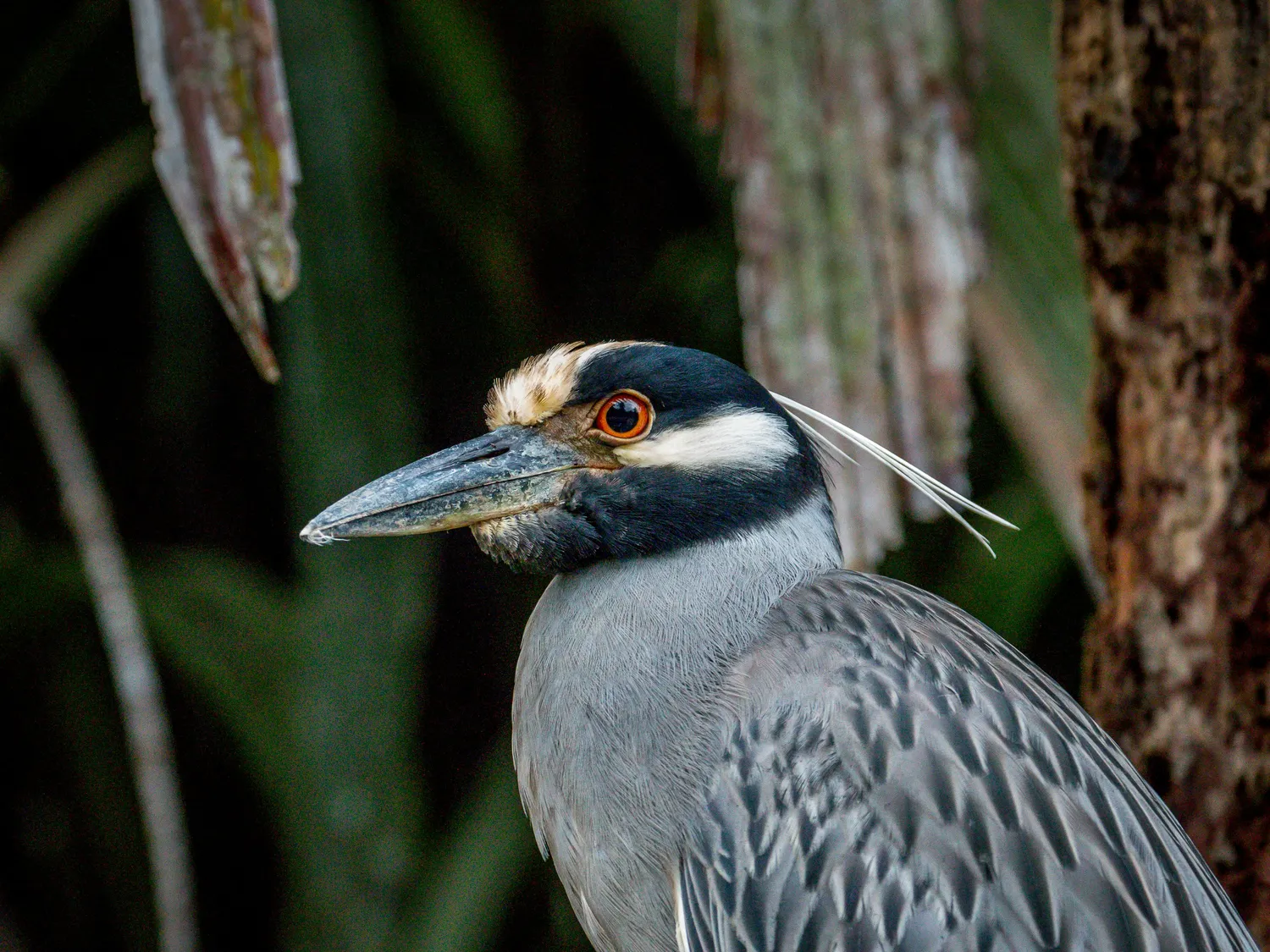
A guided canal tour lasts 2 to 3 hours and costs US$30 to 45 per person ; guided canoe or kayak outings run around US$30 to 40, and independent kayak rental around US$20 per day. My field advice: take the earliest departure (often 5:30-6 am), wildlife is incomparably more active before the heat. To know what to look for through your binoculars, reread our guide wildlife watching in Costa Rica.
The national park: fees and practical info
Tortuguero National Park protects some 77,000 hectares of land and sea. Entrance costs US$15 + 13% tax (i.e. ~US$17) per foreign adult, US$5 per child. Note this important particularity: tickets can only be purchased online on the SINAC website, at the latest the day before — there is no ticket office on site. Your lodge or guide will usually help you book. The park is open every day, from 6 am to 12 pm then from 1 pm to 4 pm.
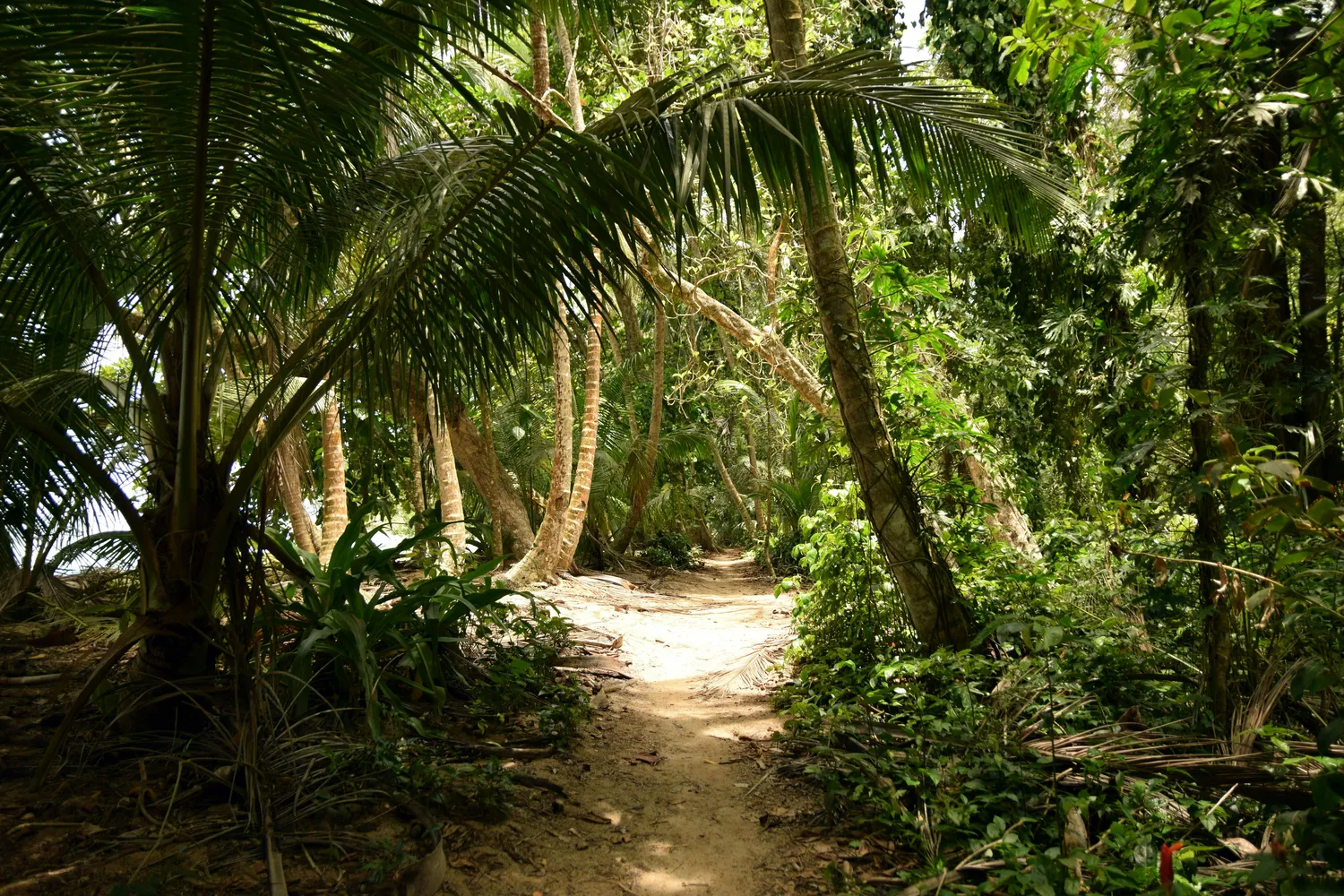
Besides the canals, the Cuatro Esquinas sector, near the village, offers a land trail that runs along the beach under the coconut palms and dives into the coastal forest — a lovely one- or two-hour walk to complement the boat outing. To place Tortuguero among the country's great protected areas, take a look at our selection of the most beautiful national parks in Costa Rica.
Tortuguero village and the turtle museum
The village, wedged on a sand spit between the lagoon and the sea, can be fully explored on foot: sandy lanes, colorful houses, laid-back Caribbean vibe. Don't miss the visitor center of the Sea Turtle Conservancy (entrance ~US$2.50), the oldest sea turtle conservation organization in the world, studying Tortuguero's turtles since the 1950s: a short but fascinating visit to understand what happens on the beach every night. A friendly warning: the sea here is superb to look at, but currents and sharks make it unsuitable for swimming — for beaches where you can lay your towel, head to our guide to the most beautiful beaches in Costa Rica.
When to go to Tortuguero?
Let's be honest: Tortuguero is one of the rainiest corners of Costa Rica, and it can rain all year round — that's the price of such lush vegetation. The Caribbean coast, however, follows its own rhythm, different from the rest of the country: the relatively drier windows fall in February-March and September-October. Good news: September-October also corresponds to the heart of the green turtle nesting season, while the Pacific side is in full rainy season. To fit Tortuguero into your itinerary at the best time, check our guide When to go to Costa Rica.
How long to stay, and where to sleep?
The format that works best: two nights. Arrival in early afternoon, village and museum on day 1, canals at dawn and night turtle tour on day 2 (in season). A single night forces you to compress everything; three nights will delight wildlife enthusiasts. On the accommodation side, two schools: the charming lodges on the canals, on an all-inclusive basis with transport and excursions — our preference for comfort and logistics — or the simple little hotels in the village, more economical and easy to combine with independent local guides.
| Activity | Indicative 2026 price |
|---|---|
| National park entrance (foreign adult) | ~US$17 tax included (online, the day before at the latest) |
| Canal boat tour (2-3 h) | US$30-45 |
| Guided canoe or kayak | US$30-40 |
| Night turtle nesting tour (Jul.-Oct.) | US$30-40 |
| Sea Turtle Conservancy museum | ~US$2.50 |
Tortuguero fits naturally at the start of a tour, before Arenal and the Pacific: that's exactly the framework of our 15-day Costa Rica itinerary. And if you prefer to build your trip yourself, step by step, our platform Toucan Dynamics lets you book Tortuguero directly, lodge and excursions included — with our local agency rates.
Frequently asked questions about Tortuguero
How many days should you plan for Tortuguero?
Two nights are ideal: one day for the village and the beach, one dawn for the canals, and the night turtle tour in season. A single night is possible but frustrating.
Can you get to Tortuguero by car?
No — no road reaches the village. You leave the car at La Pavona's guarded parking lot (~US$20/day) and finish by public boat (1 h to 1 h 30 of navigation, US$8-9 one way).
When can you see turtles nesting?
Green turtles nest from July to mid-October, with a peak in August-September; leatherback turtles from about March to June. Observation is only at night, with a certified guide, without photos or lights.
Is Tortuguero suitable for children?
Yes, and it's actually a favorite: everything is done by boat, the animals show up and distances are short. Check our tips for a family trip to Costa Rica ; just be careful with swimming, not recommended on this coast.
Want Tortuguero in your trip?
At Toucan Discovery, an incoming agency based in Costa Rica, we organize your Tortuguero stay from start to finish — tested lodge, boats, certified turtle guides, and the rest of the tour. Request your quote: reply within 24h.
Prefer to build it yourself? Create and book your trip directly on Toucan Dynamics, or contact our team for full support.
Plan your trip to Central America.
A Toucan Discovery advisor helps you transform these ideas into a tailor-made itinerary — Costa Rica, Panama, Nicaragua. Real-time availability, instant quote.
Plan my trip French
 English
 Spanish
 Italian
 German
 Chinese