History & engineering
Panama Canal, Casco Viejo, Portobelo, San Lorenzo

From the Miraflores locks where you watch a container ship pass live from one ocean to the other, to the 365 islands of the Guna Yala archipelago where the Guna people have lived autonomously since 1925, from the summit of Volcán Barú where you glimpse both oceans simultaneously at dawn, to Casco Viejo whose rooftop bars gaze at the new Panama City skyline — Panama is a plural emotion, geographic and human.
Panama isn't simply a Central American country — it's the pivot of the Americas. Geographically, the isthmus draws an S just 75 km wide at its narrowest point, where the Atlantic and Pacific contemplate each other. Politically, it became independent from Colombia in 1903, in a movement orchestrated with Washington to allow the canal's construction. Economically, it lives off transit — maritime via the canal, air via the Copa Airlines hub serving the whole continent, financial via an offshore center that made it the 'Latin Singapore'. And culturally, it's the most cosmopolitan country in Central America : Spanish descendants, Afro-Antilleans who came from Barbados and Jamaica to dig the canal, a Chinese community (since 1854, the oldest in Central America), Indian, Lebanese, Sephardic Jewish communities, and of course seven indigenous peoples who still occupy 22% of the territory in autonomous comarcas.
At the center of it all is the Panama Canal. Opened in 1914 after ten years of American works (and a first French project abandoned in 1889 under Ferdinand de Lesseps), it runs 80 kilometers and saves 12,000 km around Cape Horn. At the Miraflores locks, you watch the Panamax container ships pass live — the fascination is total, mechanical, hydraulic. Since the 2016 expansion, new Neopanamax locks allow the giants through: 15,000 ships a year, nearly 6% of world maritime trade. The Canal returned to Panamanian sovereignty on December 31, 1999 — a date Panamanians still celebrate. And next door, the Old Town — UNESCO 1997, a colonial old town of baroque churches and restored Andalusian balconies, with the rooftop bars of the American Trade Hotel or Tantalo — facing Panama City's futuristic skyline; nowhere else in the world offers that contrast.
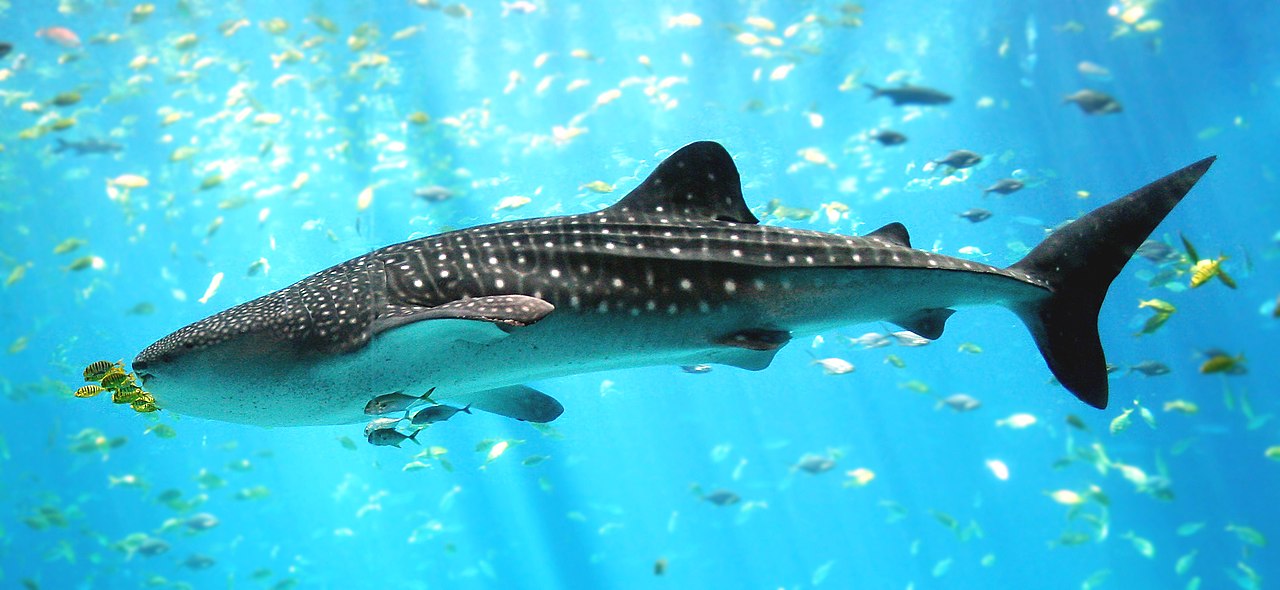
Beyond the capital, Panama is two countries layered on top of each other : the Caribbean and the Pacific. On the Caribbean side, the archipelago of San Blas / Guna Yala — 365 islands of which 49 are inhabited, managed by the Guna people since their 1925 revolution (the Guna are one of the very rare peoples in the world to have kept real political autonomy within a state). The women still sew molas, those reverse-appliqué textile panels considered a peak of world folk art — each mola is unique, hand-signed by its seamstress. Further west, Bocas del Toro, an archipelago of nine islands fringed with coral reefs and mangroves, where the Afro-Caribbean influence sets the tone — English Creole, calypso, coconut rice. On the Pacific side,Coiba Island — a former federal prison returned to nature in 2004, a UNESCO marine site since 2005, the largest tropical marine park in the Eastern Pacific — where whale sharks, manta rays and schools of hammerheads parade past. And the peninsula ofAzuero, the country's folkloric heart, birthplace of the tamborito and the pollera, the traditional dress considered the most beautiful in Latin America.
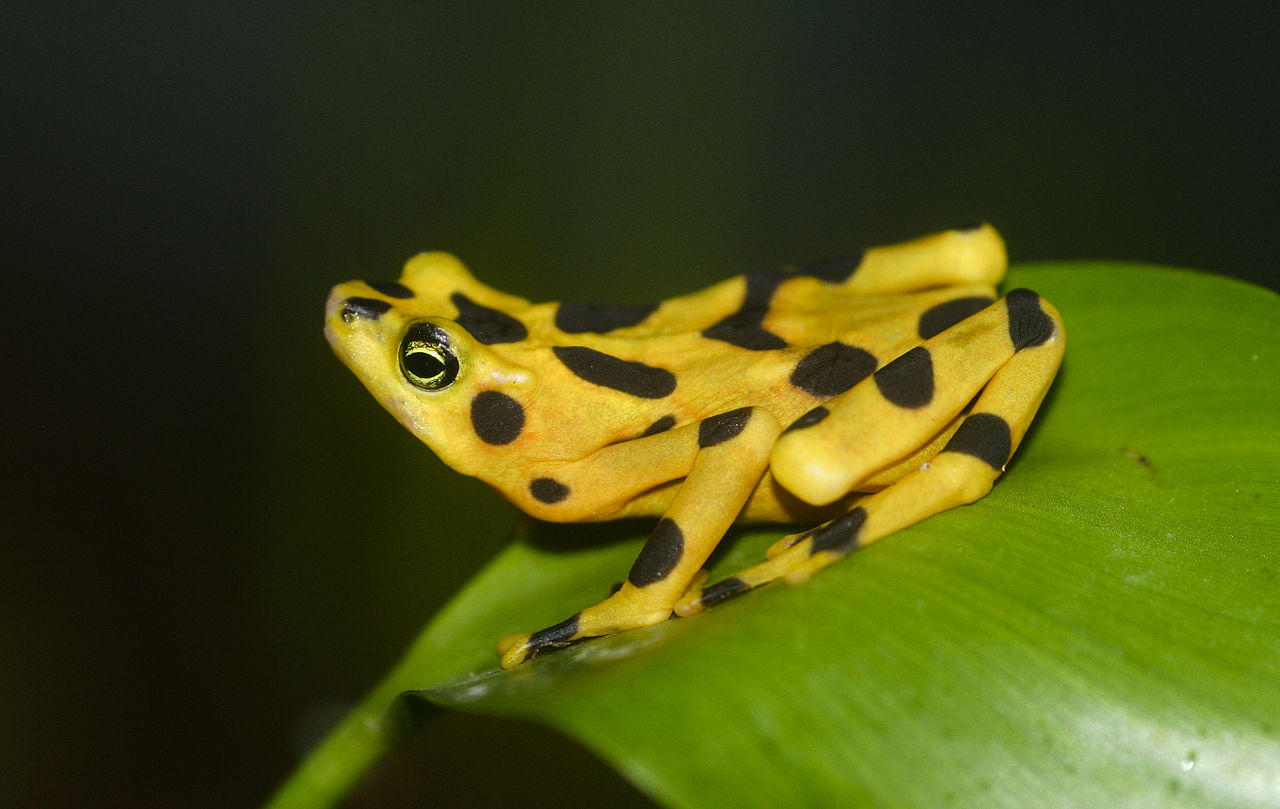
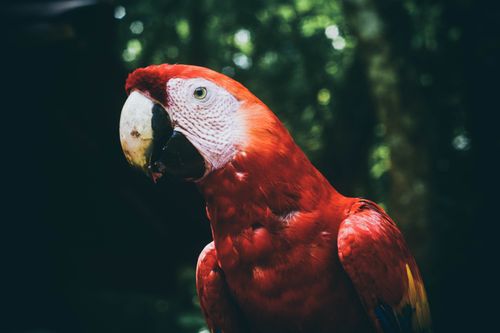
On the nature side, Panama plays in the big leagues. Wedged between Colombia and Costa Rica, at the biogeographic junction of the two Americas, it shelters nearly 1,000 bird species — more than Canada and the United States combined. This is home to the Harpy Eagle (águila harpía), the national bird and and the most powerful raptor in the world, which hunts monkeys and sloths in the Darién canopy. This is where you find the Panamanian golden frog (Atelopus zeteki), a national symbol critically endangered. On the coffee side, the highlands of Boquete and Volcán have produced for twenty years the legendary Geishavariety, whose lots from Hacienda La Esmeralda have shattered every world auction record — over 10,000 dollars a pound at special sales. One last decisive point: Panama is outside the hurricane corridor. No hurricane possible — the latitude is too low. While its northern neighbors have to manage hurricane season, Panama can be visited year-round. It's the only Central American country you can say that about.
From Panama Metro and its Canal to the Guna San Blas, from the Chiriquí Highlands to the South Pacific islands — each region has its temperament, its language, its climate.
From the Canal to Volcán Barú, from the Guna islands to the Bocas reefs, from the Azuero beaches to the deep Darién jungle — Panama concentrates geographies that few countries in the world gather in so few kilometers.
Each destination is a journey in itself. Filter by desire to find those that speak to you.

A UNESCO colonial old town, rooftop bars, Plaza Bolívar, Plaza Francia, the futuristic skyline across the bay.

80 km, Miraflores live, 2016 Neopanamax locks, Bridge of the Americas, Centennial Bridge, cargo transits in real time.

365 islands, the Guna people autonomous since 1925, hand-embroidered molas, strictly supervised community tourism.
.jpg/1280px-Bocas_del_Toro,_Panama_(Unsplash).jpg)
9 islands, coral reef snorkeling and diving, Bastimentos NP, Red Frog Beach, Starfish Beach, Afro-Caribbean Creole.

Hacienda La Esmeralda Geisha coffee (world record), Volcán Barú 3,475m, sunrise over both oceans.
.jpg/1280px-Welcome_to_Isla_Coiba_(2070475089).jpg)
A former federal prison returned to nature, UNESCO 2005, whale shark, manta rays, hammerheads, top Pacific diving.

Las Tablas Carnival (Central America's biggest festival), pollera, tamborito, Playa Venao surf, Isla Iguana reserve.
_11.jpg/1280px-Portobelo_(2005)_11.jpg)
UNESCO Spanish colonial forts (San Lorenzo, Santiago, San Jerónimo), the Cristo Negro pilgrimage October 21, congos.
Panama counts nearly 1,000 bird species — more than Canada and the United States combined. A biological bridge between the two Americas, it shelters some of the continent's rarest and most powerful animals.

.jpg/1280px-Jaguar_(Panthera_onca).jpg)


Build and book your trip in a few clicks: live hotel availability (American Trade, Bristol, Tranquilo Bay, Los Establos…), negotiated rates, secure payment. Toucan expertise, digital speed.
Spot destinations that fit your travel style at a glance.
Panama Canal, Casco Viejo, Portobelo, San Lorenzo
Guna Yala, Bocas del Toro, Isla Colón, Bastimentos
Boquete, Volcán, Cerro Punta, Hacienda La Esmeralda
Coiba Island, Santa Catalina, Bocas reefs, Granito de Oro
Azuero, Las Tablas (Carnival), Pedasí, Chitré, La Villa
Guna molas, Embera cocobolo & tagua, Ngäbe-Buglé sombreros
Playa Venao, Santa Catalina, Cambutal, Morro Negrito
Panama City, Casco Viejo, Cinta Costera, Amador, Biomuseo
Choose the one that appeals to you. Request a custom quote or book directly on Dynamics.
9 nightsPTY → Panama City & Casco Viejo (3n, Miraflores, Biomuseo, rooftop bars) → flight to Bocas del Toro (5n, Isla Colón, Bastimentos NP, Red Frog, Starfish Beach, reef snorkeling) → back to PTY (1n). The Panama signature: two faces, one country.
 7 nights
PTY → Casco Viejo (2n, Miraflores) → flight to Guna Yala (4n in a community lodge run by the Guna, snorkeling, buying molas directly from the seamstresses, dinners by the fire) → back to PTY (1n). The country's most authentic experience.
 10 nights
PTY → flight to David → Boquete (4n, Hacienda La Esmeralda Geisha tasting, Quetzal Trail, Volcán Barú sunrise) → transfer to Santa Catalina (4n, Isla Coiba diving — whale shark, mantas, hammerheads) → back to PTY (1n). Connoisseur-grade Panama.
 8 nights
PTY → Casco Viejo (2n) → Azuero peninsula (5n based in Pedasí, the artisans' route of Las Tablas and Guararé, Isla Iguana, Playa Venao surf, Isla Cañas turtles June-Nov) → back to PTY (1n). Deep Panama, beyond the postcard.
14 nightsPTY → Casco Viejo & Canal (3n) → Guna Yala (3n) → flight David / Boquete (3n, Geisha coffee, Volcán Barú) → Santa Catalina (2n, Coiba diving) → Azuero (2n, Pedasí, Las Tablas) → back to PTY (1n). The country in all its diversity, from the Pacific to the Caribbean, from the Canal to the Guna people.
Panama can be visited year-round — one of its great assets. Outside the hurricane corridor (unlike the neighboring Caribbean), a tropical climate with two clear seasons. Here are the nuances to know.
Good to know: Panama enjoys a geographic position unique in Central America : too far south for the Caribbean hurricane corridor, it never takes a direct hurricane. While the Yucatán, Belize, Honduras and Nicaragua must manage hurricane season (June-November), Panama remains fully travelable. The lluvias rains often fall only in the late afternoon — mornings stay clear and bright. The Pacific dries faster than the Caribbean : for Bocas, San Blas and Portobelo, favor Dec-Apr. For Boquete, Coiba, Azuero, any month works. Our local agency adjusts itineraries to the weather in real time.
The essentials in 8 cards. We'll take care of the rest.
International airport Tocumen (PTY) in Panama City — Central America's largest hub. Direct flights from Paris CDG (Air France, 11h direct), Madrid (Iberia, Air Europa), Amsterdam (KLM). Copa Airlines serves the whole continent from Panama — practical for combining with Costa Rica, Colombia, Cuba, Mexico. Domestic flights with Air Panama to David (Boquete), Bocas, Guna Yala.
No visa for EU nationals (stays < 180 days). Passport valid 6 months after your exit date. Automatic tourist card on arrival. Proof of funds sometimes requested (rare). Panama is not part of CA-4 (Guatemala / El Salvador / Honduras / Nicaragua) — a formal border with Costa Rica at Paso Canoas / Sixaola.
No mandatory vaccines for France (except yellow fever if arriving from an endemic zone — and advised for the Darién). Recommended: hepatitis A & B, typhoid, DTP. DEET repellent (urban dengue, malaria in the low Darién and Guna Yala zones). Tap water drinkable in Panama City and Boquete, bottled elsewhere.
The US dollar (USD) is the official currency since 1904 — American bills in circulation. The Balboa (PAB) exists only as coins, pegged 1:1 to the USD. No need to exchange if you arrive from Europe with USD. Visa / MC cards accepted everywhere in cities and resorts. ATMs in Panama City, Boquete, David, Bocas. 10% tip, sometimes included.
Spanish is official — the Panamanian accent is fast, influenced by English. English widely spoken in the tourism sector, in Panama City (the historic Canal zone), Bocas del Toro (Afro-Antillean Creole), Boquete (a large expat community). The 7 indigenous languages (Guna, Ngäbere, Embera, Wounaan, Naso, Bri-bri, Bokota) remain alive in the comarcas. Our local agency = certified French-speaking guides.
Panama is one of the safest countries in Latin America — crime indicators among the region's lowest, mature infrastructure, dollarization = no chronic inflation. The tourist areas (Panama City, Casco Viejo, Bocas, Boquete, Pedasí, Coiba, Guna Yala) are safe and well managed. The Darién near the Colombian border is the exception — a sensitive zone, access only on excursions run by an accredited Embera operator, never independently.
110V / 60Hz — exactly like the United States. Type A & B (flat-prong) outlets, sometimes type C in newer hotels catering to Europe. An adapter is essential for French devices. Outages rare in urban areas, occasional in the Darién or Guna Yala — serious lodges run solar or generators.
Sancocho (the national dish: gallina criolla chicken, otoe, culantro, plantain), ceviche corvina ceviche at the Panama City market, patacones. Geisha coffee from Boquete among the world's most expensive, and Ron Abuelo 12 años Centenario, one of Central America's finest rums.
'We had underestimated the Canal. We stayed two hours on the Miraflores walkway watching a Neopanamax container ship rise 26 meters in forty minutes. It's pure engineering, almost moving. Our guide told us the story — Lesseps, the malaria deaths, the return to sovereignty in 1999. Toucan had planned the visit outside peak hours; we saw everything without the crowds.'
'The lodge had seven palm-leaf cabins on an islet 80 meters across — beach all around, palm trees, and in the distance the misty Sierra de San Blas. We lived three days at the Guna rhythm: waking to the drum, snorkeling in the morning, a mola from the seamstress Diolinda in the afternoon ($50, two months of work — I cried when I bought it), grilled fish for dinner. You understand why this people has resisted everything.'
'Our guide woke us at 11 pm to set out on foot. Five hours climbing by headlamp, an incredible starry sky, and at the summit of the Barú you wait for sunrise. At exactly 5:54, the disc rises out of the Atlantic — and behind us, the Pacific, already lit. Both oceans at the same time. We stayed an hour trying to understand what we were seeing. Toucan had picked the cloudless night — that's their job too.'
Choose the path that fits your project. Both lead to the same bridge-country.
Whether you prefer the guided path of an expert or the fluidity of our platform — your trip starts here. The pivot of the Americas is waiting for you.
Response within 48 hours. A custom 100% trip designed by our French-speaking experts based on-site.
 French French
 English
 Spanish
 Italian
 German
 Chinese